The Science of Athlete Recovery: How Sleep Architecture Prevents Soft-Tissue Injuries & Boosts Speed
Discover why deep slow-wave sleep is your most powerful tool for rebuilding muscle and slashing injury risks.

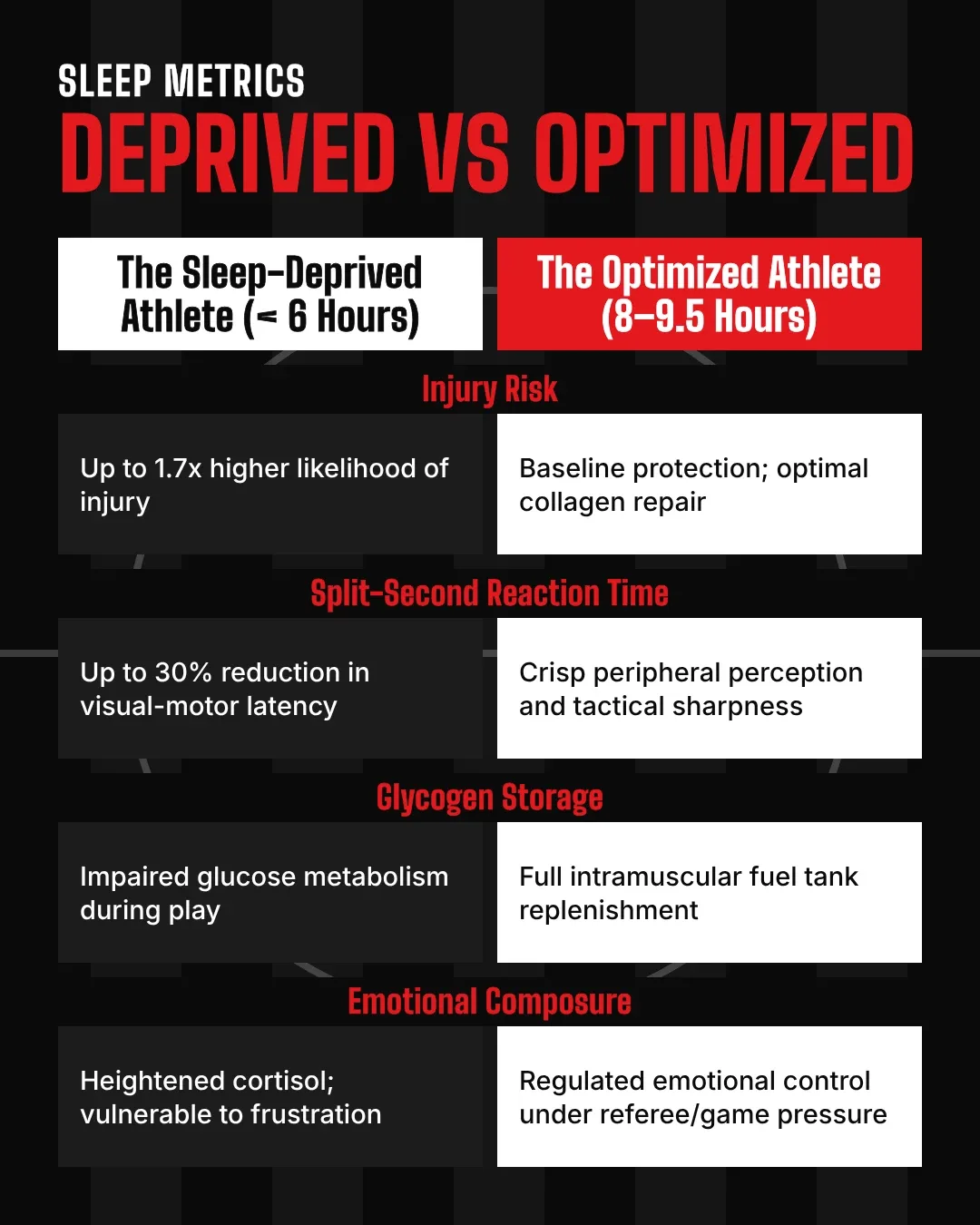
Athletes love discussing intense training sessions, lifting heavier loads, and running faster intervals. Yet few want to confront the reality that physical training does not make you faster or stronger it breaks you down. Growth, repair, neural consolidation, and hormone production happen exclusively while you sleep.
In the high-pressure environment of South African school and amateur sport, where athletes balance early bus rides, demanding academic curricula, and rigorous evening practices, sleep is routinely compromised.
Non-REM Stage 3: The Tissue Repair Chamber
During Slow-Wave Sleep (deep sleep), your pituitary gland releases the vast majority of human growth hormone (HGH). This process repairs micro-tears in muscle fibers, strengthens tendons stressed by repetitive jumping or cutting, and reduces systemic joint inflammation. Skimping on deep sleep leaves you vulnerable to overuse injuries.
REM Sleep: Consolidating Game Tactics
Rapid Eye Movement (REM) sleep is where your brain processes motor skills. That tactical passing pattern or new kicking drill you practiced in the afternoon gets hardwired into your central nervous system during REM cycles. Without adequate sleep, the neural pathways fail to solidify.
Actionable Sleep Hygiene for Athletes
- Cut Blue Light 60 Minutes Before Bed: Keep your phone out of reach to allow natural melatonin production.
- Control Room Temperature: A cooler room facilitates the body temperature drop required for deep slow-wave cycles.
- Maintain Circadian Consistency: Wake up and sleep within the same 30-minute window every day to lock in your metabolic rhythms.
Track your athletic progress, align your performance habits, and elevate your game with GlobiSport.