Holistic Talent Scouting: How Verified Credentials Can Reshape Grassroots Sports
Early biological size often masks long-term technical flaws. Here is how coaches are moving beyond the clipboard to evaluate off-the-ball character and true athletic ceilings.

For decades, talent identification across South African youth rugby, soccer, netball, and hockey adhered to a crude, predictable formula: recruit the fastest sprinter, the tallest lock, or the heaviest ball-carrier.
Yet coaches operating at the cutting edge of youth athletic development understand the fatal blind spot in that approach: early biological maturity often masks severe technical, tactical, and psychological limitations.
When selectors evaluate emerging talent solely on raw physical output, early-developer bias sets in.
The result?
Sky-high attrition rates when these players graduate to senior or varsity tiers, where everyone is equally fast, strong, and physical.
1. Deconstructing the "Early Developer" Bias
In junior rugby (such as U13 Craven Week feeders) and youth football tournaments, an athlete born in January often possesses an immense biological developmental lead over an athlete born in November of the same year. This Relative Age Effect (RAE) frequently leads scouts to confuse biological maturity with superior athletic potential.
Modern talent evaluators look beyond temporary physical mismatches by assessing:
- Bilateral Skill Execution : Does the soccer midfielder cleanly distribute off their non-dominant foot? Can the rugby playmaker pass off either hand with identical spiral velocity under an oncoming blitz defense?
- Problem-Solving When Neutralised: How does a dominant athlete react when confronted by equal physical strength or a disciplined double-tackle? Do they adapt by using footwork and vision, or do they force low-percentage plays?
2. Evaluating Off-the-Ball Character & Psychological Grit
An athlete's long-term ceiling is frequently revealed in the untelevised margins of play. Television cameras and casual spectators follow the ball; modern scouts watch the player off it.
- Reaction to Unforced Errors: When an athlete loses possession or misses a tackle, do they immediately drop their head, or do they initiate an explosive recovery sprint to contest the counter-attack?
- Communication and Collective Leadership: Listen to how a player coordinates their defensive line during phase play, or how they steady teammates after conceding points.
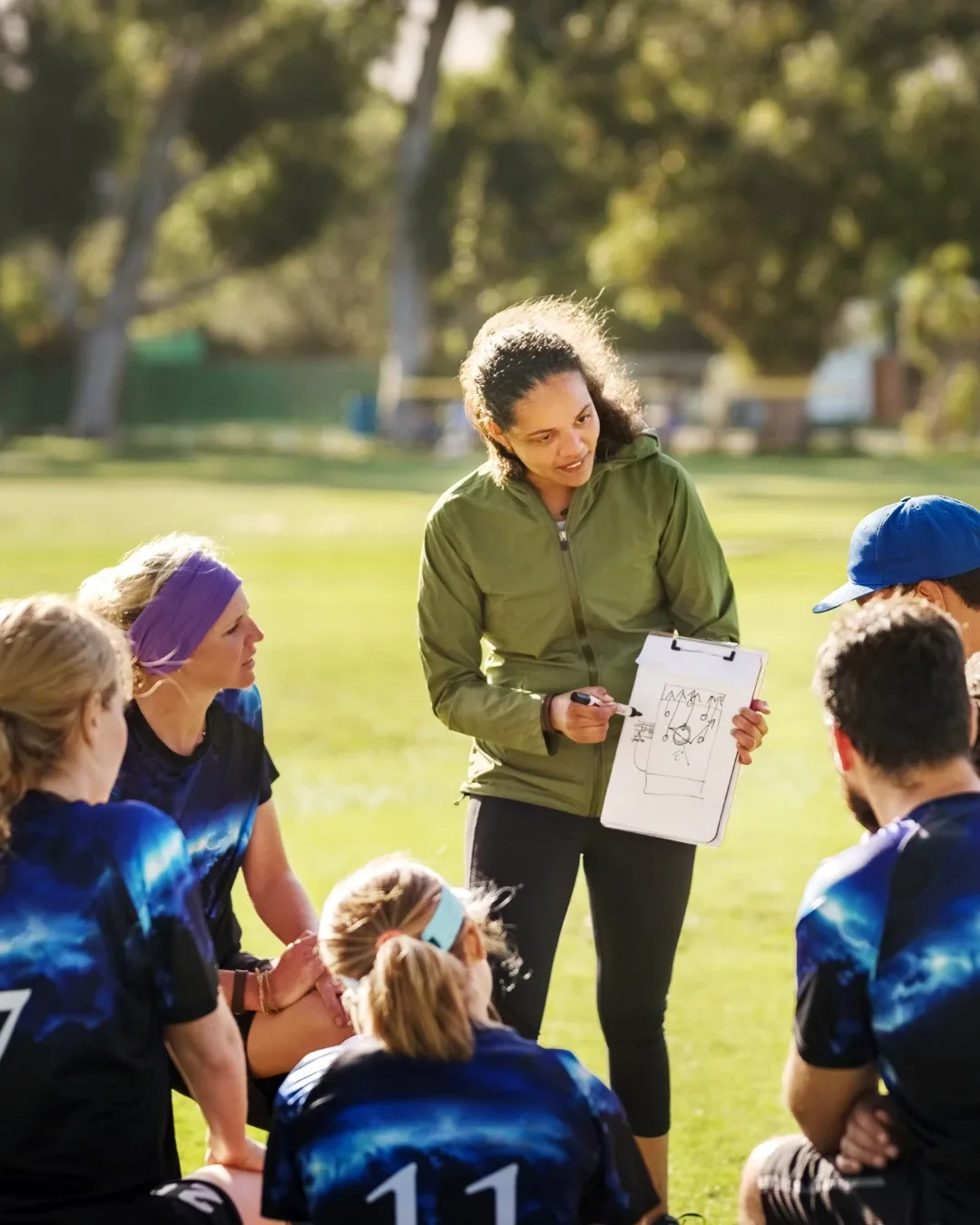
- Coachability in the Pocket: During a tactical huddle or half-time briefing, does the athlete actively absorb instructional feedback, or do they display defensive body language?
3. A 4-Step Framework to Overhaul Your Scouting Process
- Shift Benchmarks from Absolute to Relative Metrics : De-emphasize raw bodyweight and isolated top speed. Evaluate relative strength-to-weight ratios, change-of-direction mechanics, and deceleration capacity- the true indicators of injury resilience and agility at senior levels.
- Audit Unscripted Off-the-Ball Behavior: Watch players during live reset moments and defensive scrambles. Dedicate at least one continuous 10-minute block per match exclusively to observing a prospect when they are nowhere near the ball. Track their scanning frequency, defensive spacing, and positional posture.
- Test Skill Retention Under Physical Fatigue: Assess technical execution during the final quarter of competitive fixtures. Elite prospects maintain passing precision, tackling technique, and spatial discipline even as heart rates peak and lactic acid accumulates.
- Replace Paper Clipboards with Centralized Profiles: Eliminate disparate notes, unfiled scouting sheets, and lost video files. Log observations directly into standardised, multi-season digital profiles that your entire technical staff can review collaboratively.
Build a Sustainable Recruitment Pipeline
Championship-caliber sports programs are not constructed on hunches or touchline scribbles. By modernising your talent identification framework to evaluate technical depth, spatial IQ, and emotional resilience alongside physical metrics, you protect your academy against early-developer drop-off and uncover genuine high-ceiling talent.
Upgrade your talent identification methodology. Use GlobiSport to source, evaluate, and monitor the next generation of South African sporting talent with comprehensive, contextual clarity.